
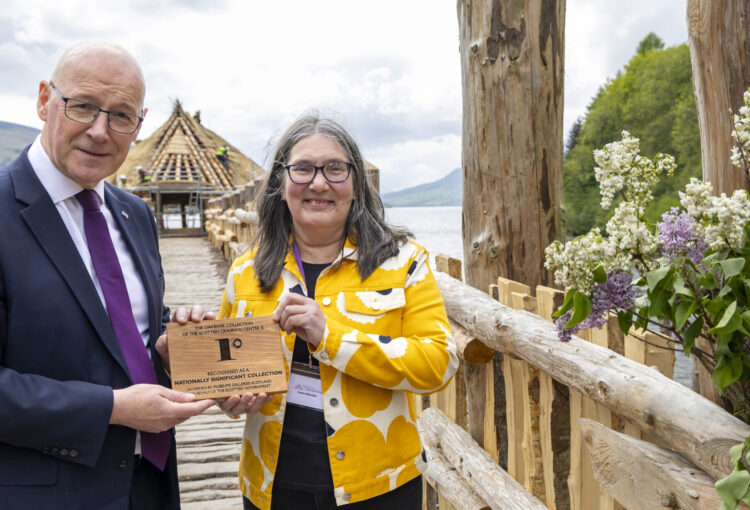
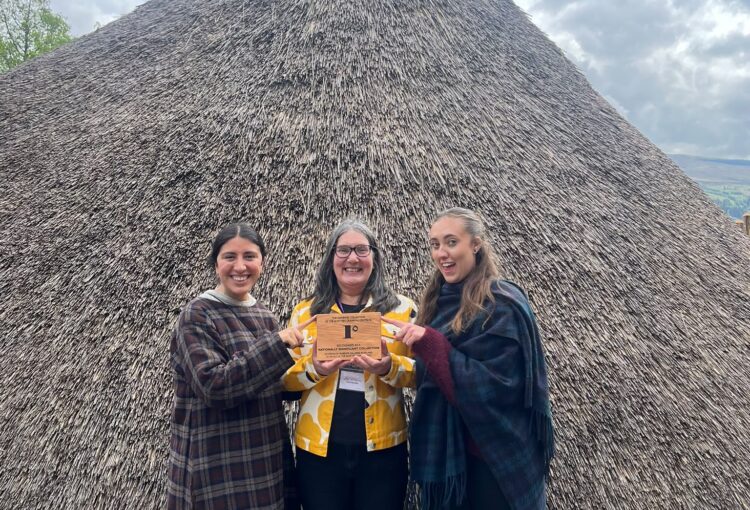
“The Oakbank Collection, displayed at the Scottish Crannog Centre, has been recognised as one of the 56 Nationally Significant Collections by Museums and Galleries Scotland. Demonstrating the artefacts are important and significant for Scottish heritage, both nationally and internationally.
The collection comprises a number of unique, exceptionally well-preserved artefacts excavated at the Oakbank Crannog from 1979 to 2005, one of the UK’s foundational underwater archaeology projects. The artefacts dated to 450 – 500 BCE, the early Scottish Iron Age, showcasing craftsmanship, skills, techniques giving us a glimpse into the lives of the Loch Tay crannog dwellers.
Finely-worked wooden plates, vessels and utensils, architectural remains with tool marks, remains of rope and flooring materials revealing information about techniques and tools used; finds relating to textiles such as spindle whorls, the oldest known 2:1 twill woollen textile in Britain, a fastening toggle, alongside stone beads, fragments of basketry; a lyre bridge and a wooden whistle reflecting both utility and artistry; animal bones, droppings and a foot plough, evidencing livestock and farming; pottery with burnt food, a quernstone, remains of foodstuffs such as hazelnuts, cherry stones, and even butter made from cow’s milk make up the collection giving an unparalleled insight into Iron Age life.
The importance of the collection relies on the context of the artefacts excavated. Artefacts from the Iron Age period have been displayed in different museums, normally dating from the late Iron Age whereas this collection represents the early Iron Age. Preserved in exceptional condition, through the anaerobic environment under the silt of the loch, the collection contains unique artefacts that would normally perish, like wood and textiles. Exhibited within the same landscapes they were used, and probably crafted, 2500 years ago. The objects reflect the everyday life of crannog dwellers in Scotland.
The artefacts are of great significance; they can transport us to the past, connecting the communities from the Iron Age to the present. Being displayed in a rural museum, exactly where the communities lived, allows rural accessibility, where people can engage with their own heritage. Also, the artefacts provide evidence of trade with other communities around Britain, Europe and Asia; the artefacts are reminiscent of other cultures around the globe, allowing a diverse interpretation to the objects that we all seem to have a connection with.
From the time of the excavation until now, researchers have been interested in the collection, from professionals and amateur interpreters (weavers, blacksmiths, woodworkers), as an important part of Scottish heritage and history. A deeper look into the artefacts gives an understanding of the skills and techniques used in Iron Age Scotland. The intricacy and tool marks of the artefacts showed demonstrable vernacular skills to reinterpret, helping to reconstruct the crannog and the village at the Scottish Crannog Centre, and by using experimental archaeology gain a deeper understanding of these communities.
It was a pleasure to have worked so close to the collection; it brought me joy, allowed me to better understand the artefacts and deepened my respect and admiration for the communities of the past. This further insight into Scottish heritage granted me the opportunity to develop both professionally and personally.”
Mariana Ortega Alvarez